
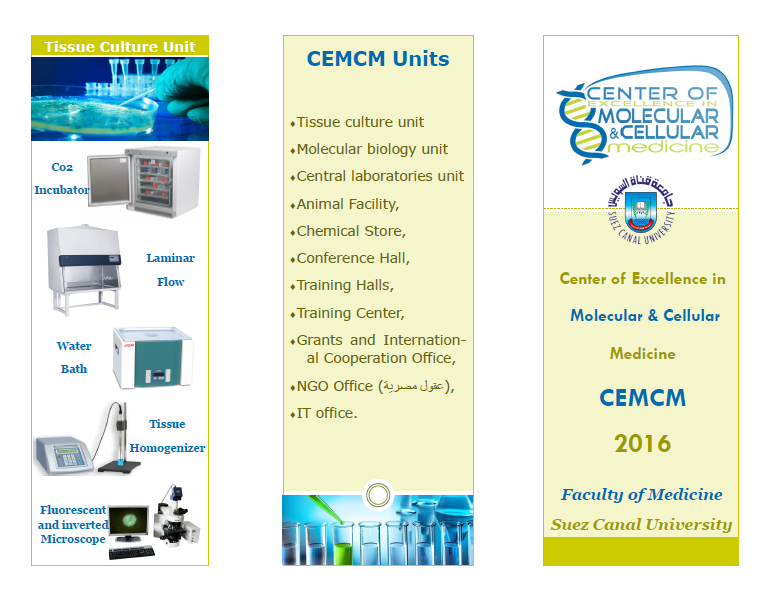
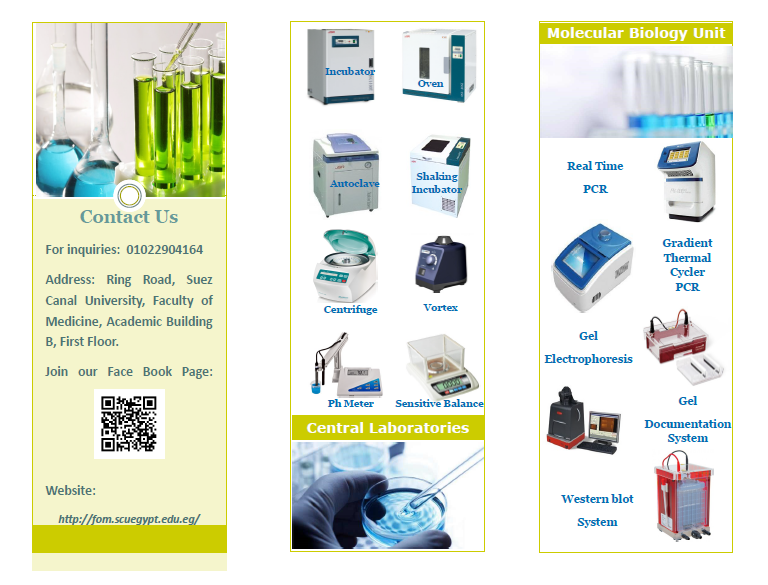
Overview
The unit combines a cellular biology unit, a Microscope unit, a tissue culture, and a sample preparation unit.
Vision
To be a center of excellence and pioneer regionally in the cellular and molecular research field.
Mission
The center of excellence in cellular and molecular research at Suez Canal University aims to:
- Train researchers on discreet research skills.
- Cooperate with research institutes locally and internationally.
- Develop cellular and molecular research in the Suez Canal region with the help of a group of researchers in a distinctive educational system concerned with scientific research that meets the community’s needs.
Goals
- Advance faculty’s scientific research level.
- Increase research cooperation between faculty’s different departments.
- Create communication links with faculty’s students present in discrete research places outside Egypt.
- Support applying the faculty’s research plan by promoting conducting research in specified fields stated in the research plan.
- Creating an environment enables training and graduating researchers can compete locally and internationally.
- Increase research cooperation with the faculty and other research bodies inside and outside the faculty.
Specified Goals
Goal 1: (Enhancing the level of scientific research at the college)
- Increasing the rate of international publications at the college by publishing at least two research papers each year from the work produced at the center.
- The center receiving two funded research projects over five years.
- One of the researches conducted at the center winning a distinguished local or international award.
Goal 2: (Increasing research collaboration between different departments of the college)
- Conducting at least ten scientific researches involving more than one scientific department at the college and publishing no less than one research annually.
- Conducting at least ten research-educational activities between the various departments at the center, such as workshops, lectures, seminars, joint research projects, or conferences.
Goal 3: (Establishing communication channels with college alumni who are in distinguished research positions abroad)
- Coordinating mutual scientific visits between the college and the research institutions where they work.
- Contributing to the completion of two of the ongoing scientific researches at the college annually.
- Contributing new research ideas to be implemented at the center.
- Providing scientific consultations to college researchers when needed using modern communication means.
Goal 4: (Supporting the implementation of the college’s research plan by encouraging research in the areas specified in the college’s research plan)
- Funding three scientific theses (two master’s and one PhD) and three post-doctoral researches, ensuring that the research topics fall within the scope of the college’s research plan.
Goal 5: (Creating a research environment that allows for training researchers capable of competing locally and internationally)
- Achieving ten activities (training courses, workshops, seminars, conferences, or scientific clubs) to train at least 100 people annually on basic and advanced techniques in the field of cellular and molecular medicine.
Goal 6: (Increasing research collaboration between the college and other research entities inside and outside the university)
- Hosting researchers from at least two research institutions outside the college to conduct research annually within the center.
- Conducting at least one joint research project between the college and other faculties of the university or research centers within the university.
- Conducting at least one joint research project between the college and external research entities, such as the Academy of Scientific Research, research centers, or other Egyptian universities (over five years).
- Publishing three researches involving researchers from both inside and outside the college over five years.
Molecular Biology Unit
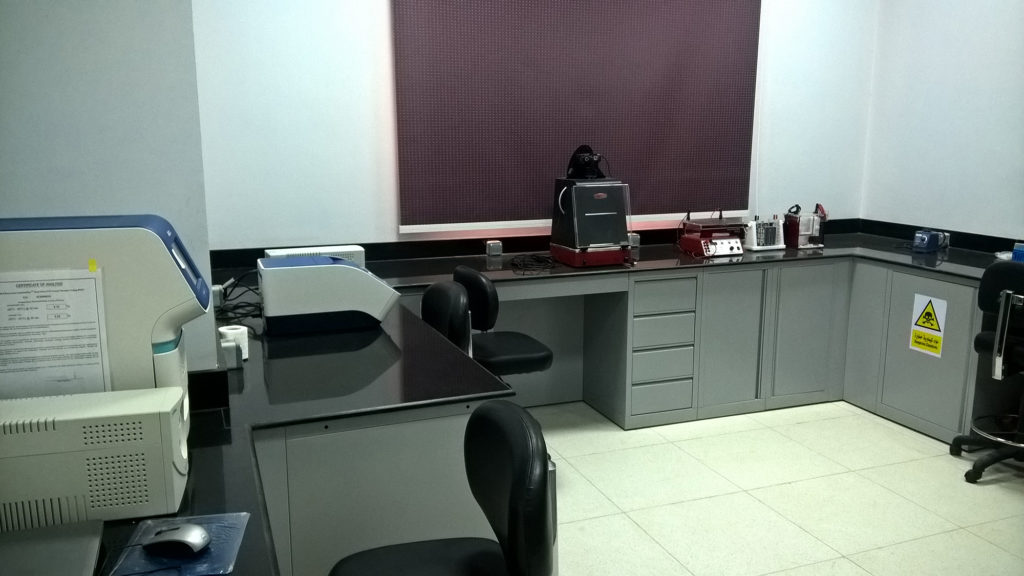
Microscopy Unit
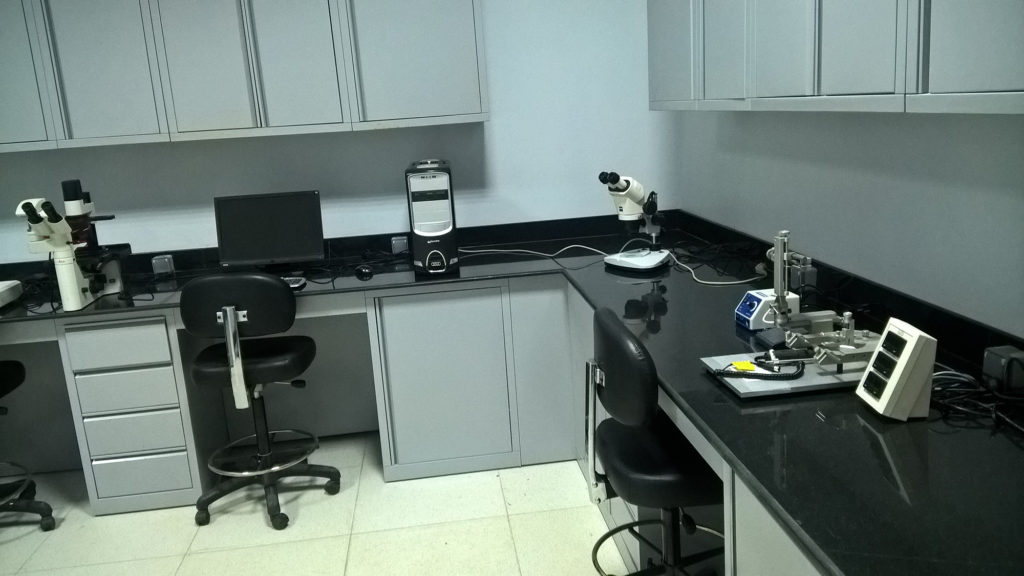
Tissue Culture Unit - Sample Preparation
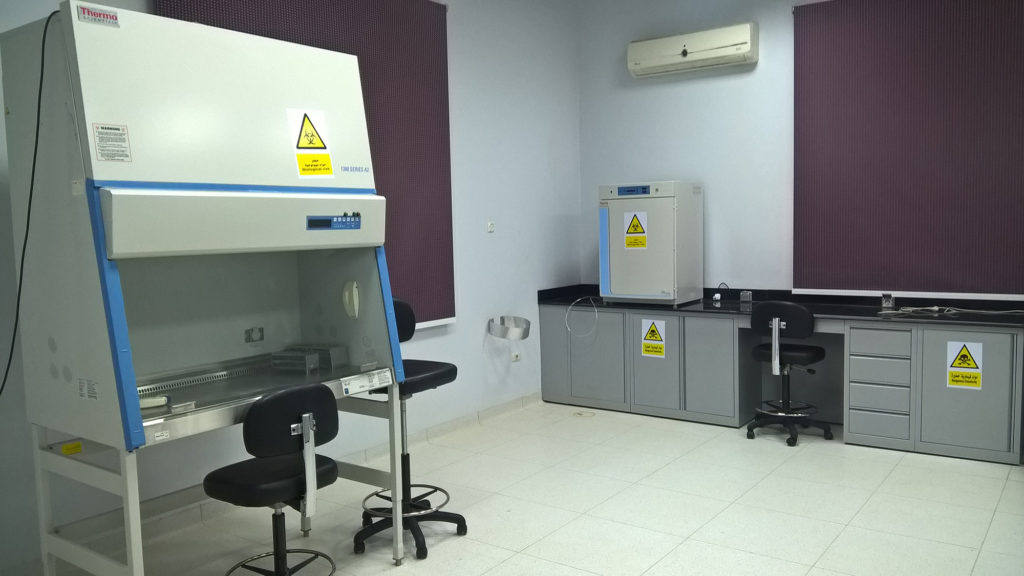
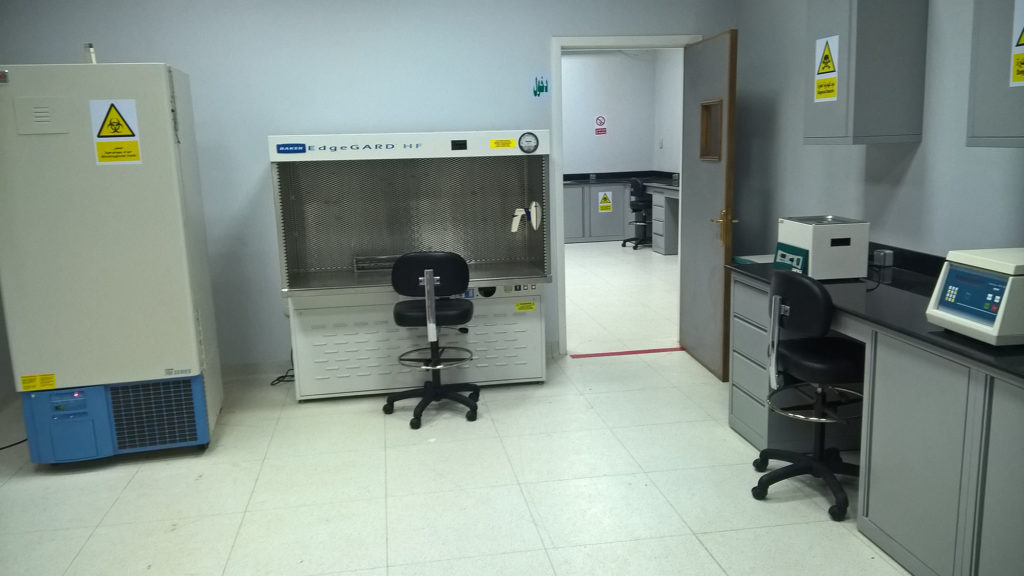
For more information about the unit, kindly check the following attached files.
Presentation of the Quality Unit
6th Regulation of the Quality Assurance Unit - Faculty of Medicine
Job Description of the Quality Assurance Unit 2019-2020
Executive Plan of the Quality Unit 2020-2021
Bachelor's Follow-up Plan 2019-2020
Postgraduate Follow-up Plan 2019-2020
Academic support unit functions:
- Outline academic supervision plan for the faculty.
- Spread awareness among students about the unit, its importance, and how to take advantage of it by doing meetings, publications, and the faculty’s website.
- Introduce students to the faculty’s goals, mission, scientific programs, scientific departments, education system, exams, working fields, and types of care and services provided for the students. Directing students’ potential and helping them to choose their specialization matching their skills.
- Distribute newcomers’ students among academic advisors. By the beginning of each year publish lists on the announcement table and faculty’s portal.
- Support excellent and talented students using current methods.
- Take all measurements to enhance weak students’ levels and solve their problems.
- Provide support for disabled students to continue their education.
- Check students’ academic complaints and try to solve them.
- Prepare periodical report including unit tasks and presents them to the scientific departments’ council and faculty’s council
- Solve students’ academic and scientific problems in coordination with academic staff members.
Tasks of the Academic Support Unit:
- Developing a plan for academic supervision within the college.
- Raising awareness among students about the nature of the unit, its importance, and how to benefit from its services through meetings, publications, and the college's website.
- Informing students about the college’s goals, mission, educational programs, scientific departments, study and examination systems, career opportunities for graduates, and the various care and services provided to students. They are also guided to choose suitable specializations based on their abilities.
- Assigning new students to academic advisors and posting the lists on announcement boards and the college’s website at the beginning of each academic year.
- Supporting academically gifted and talented students through available mechanisms.
- Taking necessary actions to improve the performance of struggling students and finding solutions to their academic problems.
- Providing support for students with special needs and ensuring they have the necessary resources to complete their studies.
- Addressing students’ academic complaints and finding appropriate solutions.
- Preparing a periodic report on the unit’s activities to be presented to the academic departments and the college council.
- Resolving academic and educational issues faced by students in coordination with the teaching staff.
Unit Location:
First floor of the Lecture Hall Building.
Overview
It is a cooperating center with World Health Organization in medical education and health research. The CRD center was established as a cooperating center with the World Health Organization in 1988. The CRD is a pioneer authority in the Middle East and Africa. The center was constructed to meet the educational needs of academic staff members by fixing the curriculums and promoting manpower. The CRD was the only cooperating center with the World Health Organization in Egypt since 2019.
Vision
To be a center of excellence in medical education serves the Middle East region.
Mission
To promote medical education and health services by developing manpower and research locally, nationally, and regionally.
WHOCCRD reference terms:
- Contribute to acquiring an overview of education development centers present in the region to improve policy choices.
- Deal with the World Health Organization to understand the current situation and enhance community medical education on the diagonal and regional plane.
The official page of the Center for Medical Education Development on Facebook
Overview
The Measurement and Assessment unit was founded to be the 5th stage of students and exams assessment systems in Higher education by creating measurement and assessment centers and units at Suez Canal University. It is a funded unit from the Higher Education development projects administration to achieve Higher Education Ministry's strategic goal in 2030.
Vision
Pioneering and mastering the measurement and assessment field according to the medical sector's national academic guidelines.
Mission
Using a developed measurement and assessment system to attain education outputs that achieve quality for faculty graduates locally, nationally, and regionally.
| م | الوحدات ذات الطابع الخاص | اسم عضو هيئة التدريس | الإيميل الأكاديمى |
| 1 | الخدمة العامة لنادى أعضاء هيئة التدريس | د.نرمين المراغى | |
| 2 | الخدمة العامة للإسكان | ||
| 3 | الخدمة العامة للحملة الميكانيكية | ||
| 4 | مركز التدريب والتعليم المستمر طب المجتمع | أ.د/ أميرة جمال | |
| 5 | مركز تطوير وتدريب التعليم المستمر فى طب الأسرة | أ.د/ مصلح عبد الرحمن | |
| 6 | مركز البحوث وتطوير التعليم الطبى | أ.د/ محمد القليوبى | |
| 7 | مركز التعلم عن بعد | أ.د/ وجدى طلعت | |
| 8 | مركز التميز الخلوى | أ.د/ ياسر الوزير | |
| 9 | وحدة الحاسب الألى | ||
| 10 | وحدة الوبائيات | أ.د/ هشام فتحى | |
| 11 | وحدة دلالات اأورام | أ.د/ عماد اسماعيل | |
| 12 | وحدة الإنعاش و الإصابات | د. ايمان الشريف |
Formation of the Digital Transformation and Information Technology Unit at the College and University Hospitals:
-
Chairman of the Unit Board:
Prof. Dr. Ahmed El-Sakka – Dean of the College and Chairman of the University Hospitals Board. -
Vice Chairman of the Unit Board:
Prof. Dr. Adel Ahmed Hassan – Executive Director of University Hospitals. -
Board Members:
- Dr. Samah Mohamed Abdel Rahman El-Aidy – Director of the Unit and Digital Transformation Coordinator.
- Dr. Iman Riyad Hamed – Deputy Director of the Unit.
- Dr. Hala Mohamed Fathi – Secretary of the Unit for Postgraduate Studies and Research Affairs.
- Dr. Naglaa Ahmed El-Sherbini – Secretary of the Unit for Education and Student Affairs.
- Dr. Ahmed Mohamed Bakr Arabi – Secretary of the Unit for University Hospitals Affairs.
- Dr. Shaimaa Antar Farid – Assistant Professor, Department of Anatomy (Board Member).
- Dr. Samar Mahmoud Embaby – Lecturer, Department of Pharmacology (Board Member).
- Dr. Iman Ahmed Mohamed Youssef – Lecturer, Department of Psychiatry and Neurology (Board Member).
- Dr. Hagar Ahmed Abdel Hamid Ahmed – Demonstrator, Department of Pharmacology (Board Member).
-
Administrative Staff at the College:
- Ms. Rabab Said Metwally (Board Member).
- Engineer Shaimaa Kamel Atiya (Board Member).
- Engineer Marwa Ahmed Desouky (Board Member).
- Ms. Randa Said Metwally (Board Member).
-
Administrative Staff at University Hospitals:
- Engineer Ahmed Hefni (Board Member).
- Ms. Karima Abu Zeid (Board Member).
- Mr. Ramadan Mohamed Ali (Board Member).
- Mr. Adel Rashad Abdel Aziz (Board Member).
- Ms. Howaida Mohamed El-Sayed Ibrahim (Board Member).
- Engineer Mohamed El-Qamash (Board Member).
Achievements of the Unit 2019:2022
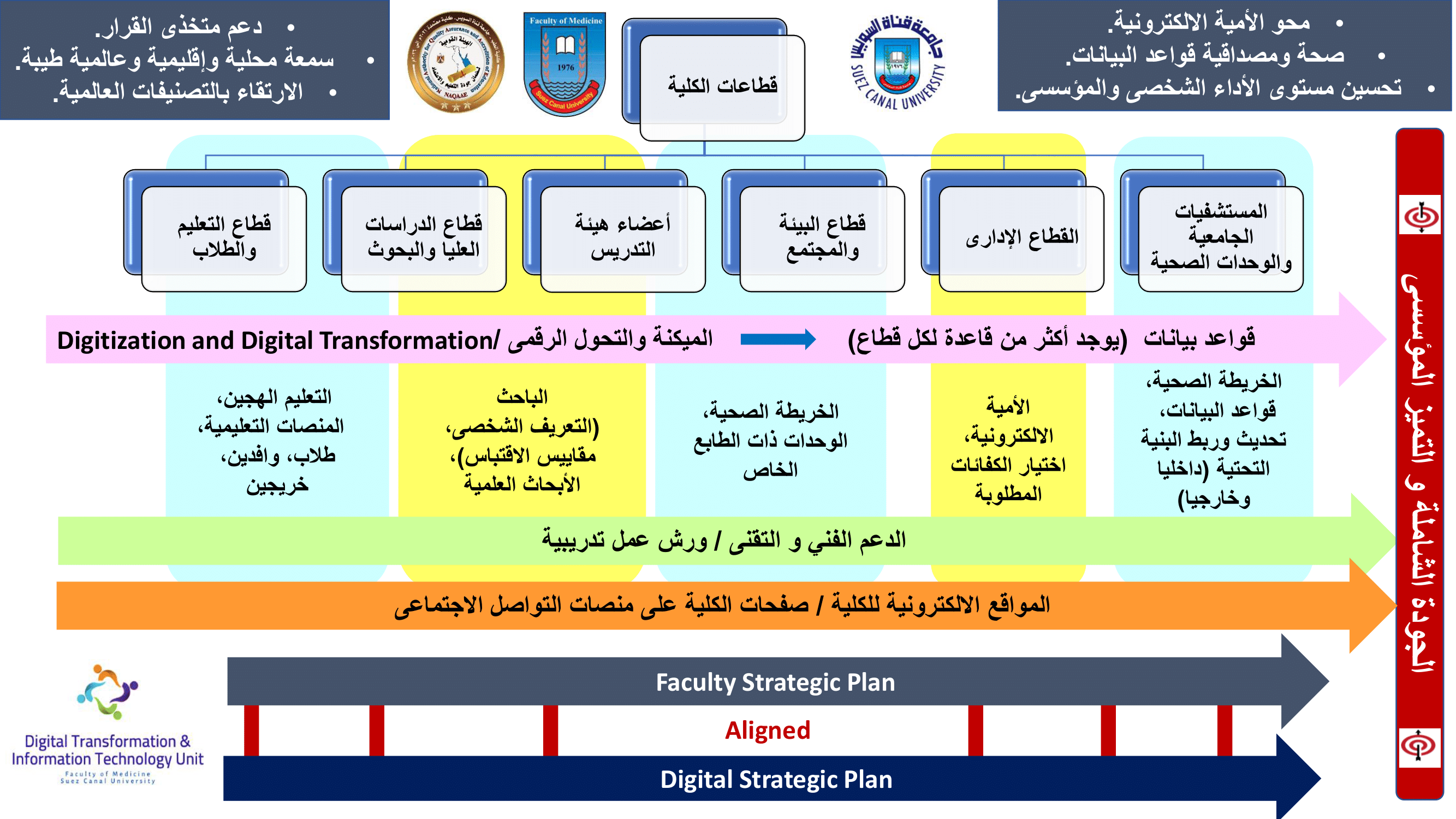
Job Description Handbook for the Digital Transformation and Information Technology Unit
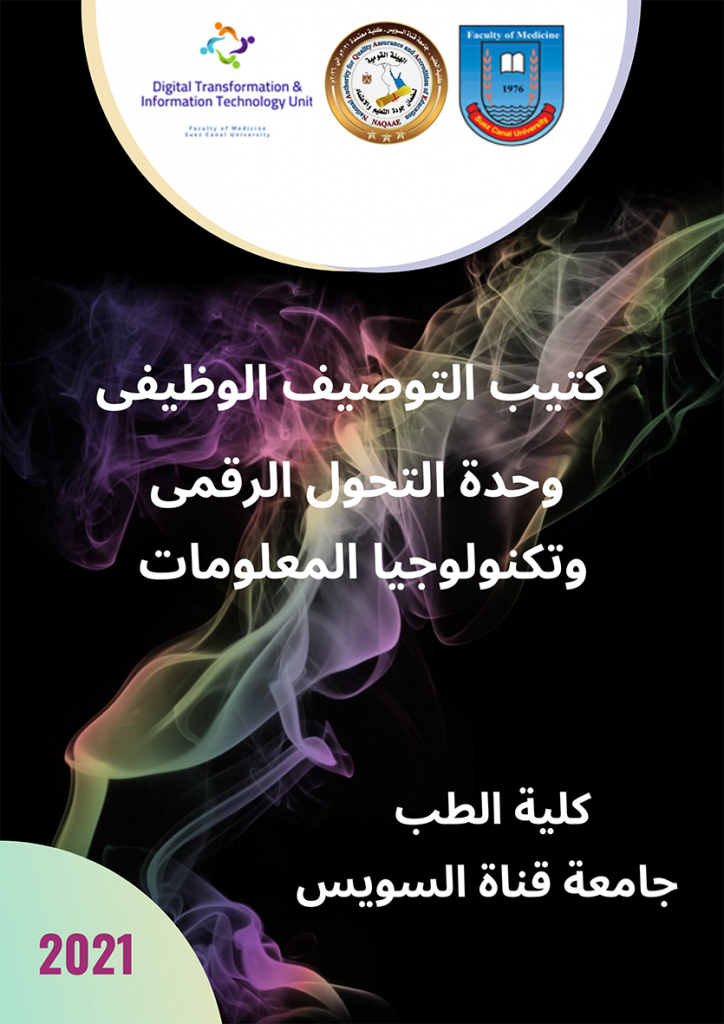
Official Unit Page on Social Media
Academic Emails of the Unit:
- General Academic Email: itunit@med.suez.edu.eg
- Undergraduate Academic Email: it.undergraduate@med.suez.edu.eg
- Postgraduate Academic Email: it.postgraduate@med.suez.edu.eg
This structure highlights the leadership and the collaborative team working towards the digital transformation and technology advancements at the college and university hospitals.
The center combines multiple devices:
• Centrifuges
• Water Bath
• Microscopes
• Spectrophotometer
• Hood
The center combines multiple devices:
• Cooling centrifuge
• Centrifuge
• Deep freezer – 80
• Autoclave
• Kymograph
• Liquid Nitrogen container
• Isolated Langendorff perfusion
• Safety flow laboratory hood
• Colony counter
• Double beam spectrophotometer
The center combines multiple devices:
• Centrifuges
• Water bath
• Microscopes
• Oven
• Shaker
• Vortex
• Balance
The center combines multiple devices:
• Laminar flow
• PH meter
• Oven
• Co2 incubator
• Microscopes
• Incubator
• Balance
• Water bath
The center combines multiple devices:
• Nano drop
• Electrophoresis
• Spectrophotometer
• Micro centrifuge
• Centrifuge
• UV trans illuminator
• Double beam spectrophotometer
• Water bath
• Microscopes
The center combines multiple devices:
• Microscope with camera
• Microscopes
• Gel electrophoresis
• PH meter
• Hot meter
• Deep freezer -40
• Centrifuge
• Incubator
• Oven
• Autoclave
• Distiller
• Scale
• Water bath
The center combines multiple devices:
• Thermo cycler
• Microcentrifuge
• Gel electrophoresis
• Elisa reader
• Plate shaker
• Laminar flow
• Electronic balance
• Vortex
• Distiller
• Microscopes (dissecting and light)
The center combines multiple devices:
• Microscopes (dissecting and light)
• Electric heater
• Refrigerators
• Digital microscopes camera
• Scales
The unit combines multiple devices:
• Real-time PCR
• Thermal cycle PCR
• Gel electrophoresis
• UV illuminator
• Incubator
• Laminar flow
• Micropipettes
• Immulite
• Elisa reade
• Co2 incubator
• Laminar flow class2
• Inverted microscope
• Flow cytometer